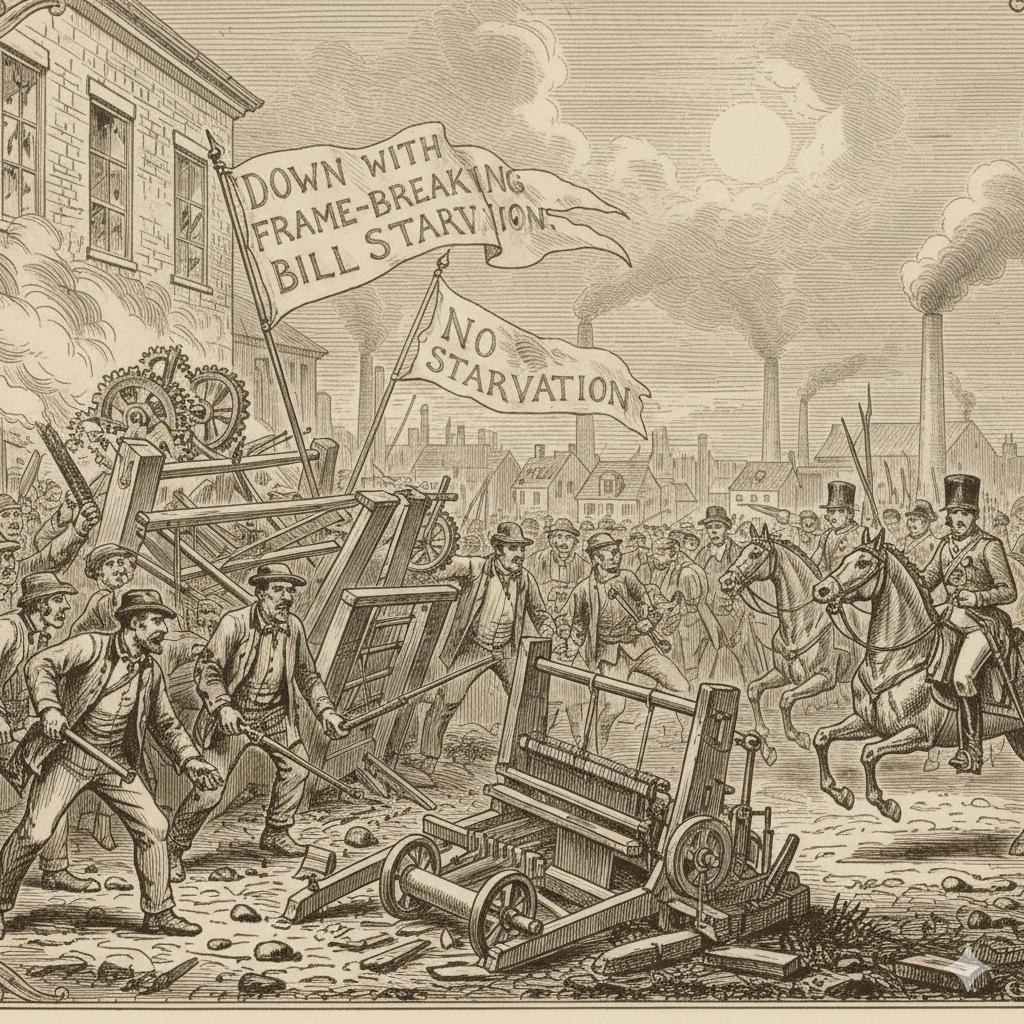
"Luddite!"
It's a word we fling at people who resist technical change. It's pejorative; technical change is inevitable, and luddites are always going to lose. Most of us probably even know the origin of the word—the Luddites were a group of workers in the north of England who went around destroying knitting machines which were taking their jobs.
Then I read an article in the Smithsonian magazine which changed the way I viewed the movement.
The article argues that the Luddites were not against technology. Instead, they were against the way it was introduced. They wanted to be trained in its use; they wanted apprenticeships.They didn't want to stop progress; they simply wanted to be integrated into the inevitable change.
AI is today's knitting machine. It automates many things that previously required people. The jury is still out, but it is likely it can do much of it more cheaply.
At the Bookshelf, we're acutely aware of this. On the one hand, AI seems to be reducing people's need for books. On the other hand, if we use an AI generated image on a cover, our support folks get a bunch of "I'll never buy from you again" emails.
I read predictions that AI is going to lead to mass unemployment. Maybe it will, but only if we fail to learn from the Luddites. Mechanical knitting machines needn't replace people; if you train people to use them it increases those people's productivity and effectiveness. Similarly, blinding firing people and replacing them with AI will never be as effective as investing in bringing the two together.
If you are a developer creating AI applications that automate what people want to do, please spend a little time thinking about the future. Don't stop developing these apps. But please think of how they can be used to enhance what people do, and not simply replace those people. Help raise your users up instead of cutting them down.
This is a scary time. For better or for worse, the future largely rests in our hands.
Be human. And have fun. |